Full-stack web application that saves your most played song of the day to a chosen playlist.
Playlist
Idea and goal
Music is very important to me - it's how a focus and relax. But my taste changes a lot. One day I will repeat a song over 100 times, then a week later skip it instantly when it comes on. So, I decided to save the song I played the most during that day to a playlist to track this behaviour. I was consistent with this initially, but soon after I started to stop as either I forgot or was simply too lazy. Automation was the solution to this; It allows me to not do anything but see a new song added to my playlist each day.
Cron jobs
The first question I set myself to solve was how would I automate this. After a bit of research, I discovered about Cron jobs - time based schedulers used to automate repetitive tasks. This was perfect for my use case as I would be running a script daily. Initially, I assumed that I host my own cron jobs, but fortunately, cron-job.org does this, completely free.
To create a cron job you have to provide two parameters, a URL endpoint and a cron schedule expression. The URL endpoint is pinged by the cron service to execute code on the server and the schedule provides how often this happens.
{
  "url": "http://example.com",
  "schedule": "30 10 15 * *", // Every 15th of the month at 10:30 AM
}
Designing the application
Next was to design and implement the web application that the cron jobs will interact with. Listed below is the stack and technologies that I decided to use.
Technologies used
- Next.js
- React
- Typescript
- Express.js
- Supabase
- PostgreSQL
- Cron jobs

This visualizes how my application interacts in sequential order, from logging in with Spotify to saving the top song to the selected playlist.
Essentially, my server will handle all communication with external services such as APIs and my database, whereas the client side and cron jobs will only serve as the trigger for these actions.
Backend
To build my backend, I followed the Controller-Service-Repository architecture. The controller will handle all incoming HTTP requests, conducting validation and then calling upon the respective services that contain all the required business logic. If the service requires database interaction, then it calls upon the repository layer, which handles all this behaviour. After that, an appropiate response is sent back with a corresponding HTTP code and data if required.
In my previous projects, I didn't really enforce any sort of architecture, which in the long run, really harmed my scalability and my ability to understand the codebase if I were to return to it after a while. However, by implementing this pattern, it really helped with this issue as it encourages code modularity and reusability.
Frontend
My frontend was not an essential part of my project since the only requirement I needed from it was to allow users to choose a playlist to save their daily song to. Therefore, I haven't finished nor deployed my frontend as of yet but I definitely plan to in the future. See photos below for what I have made so far:
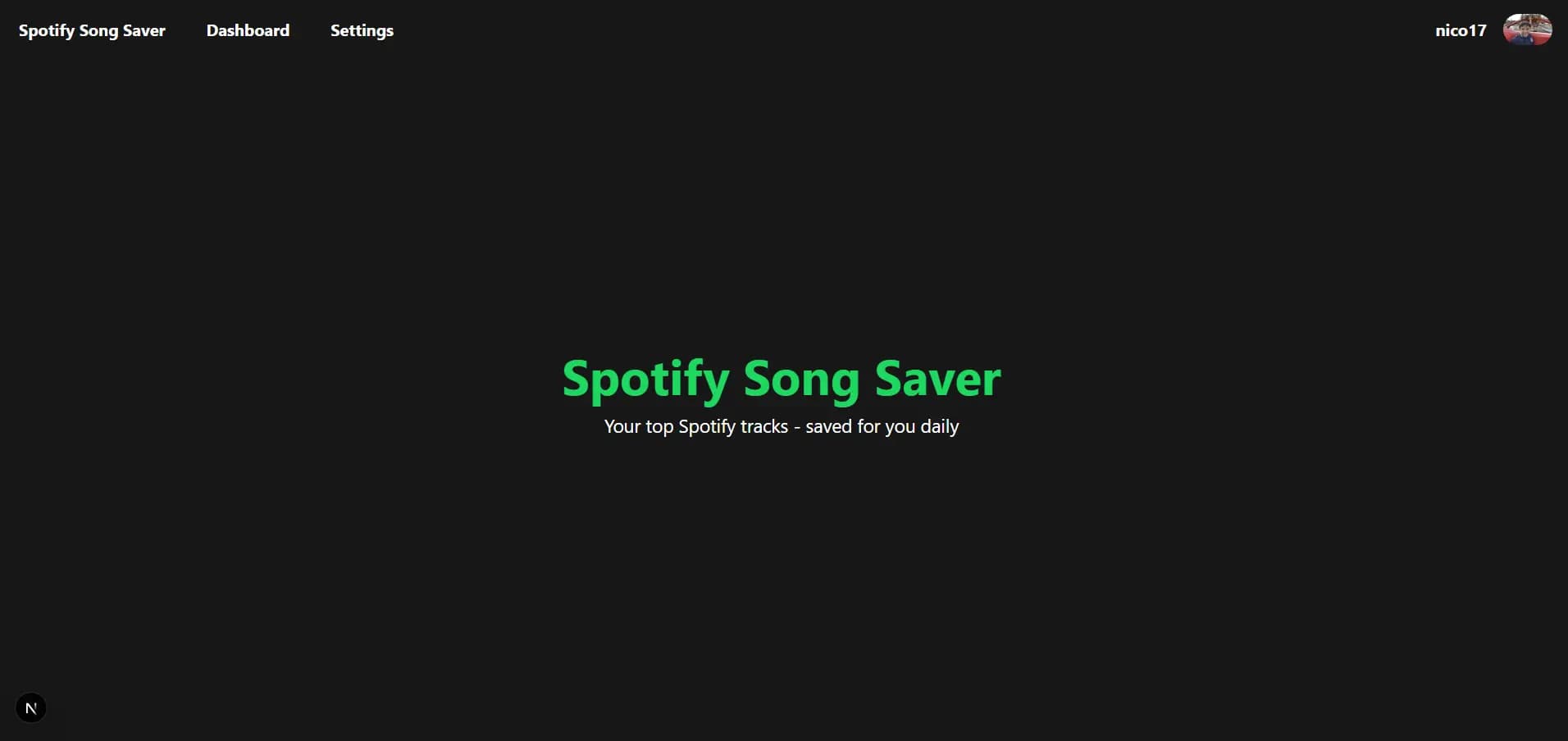
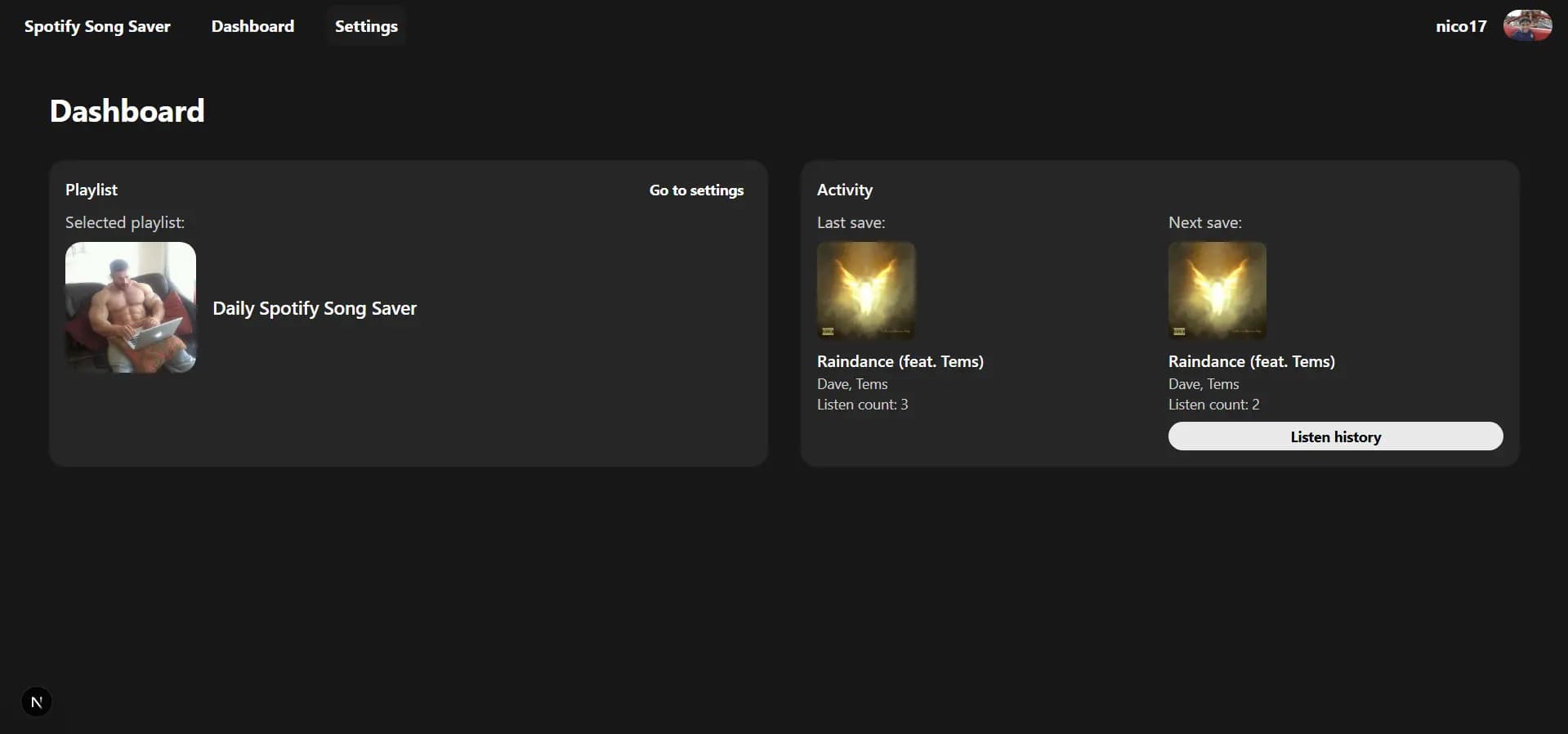
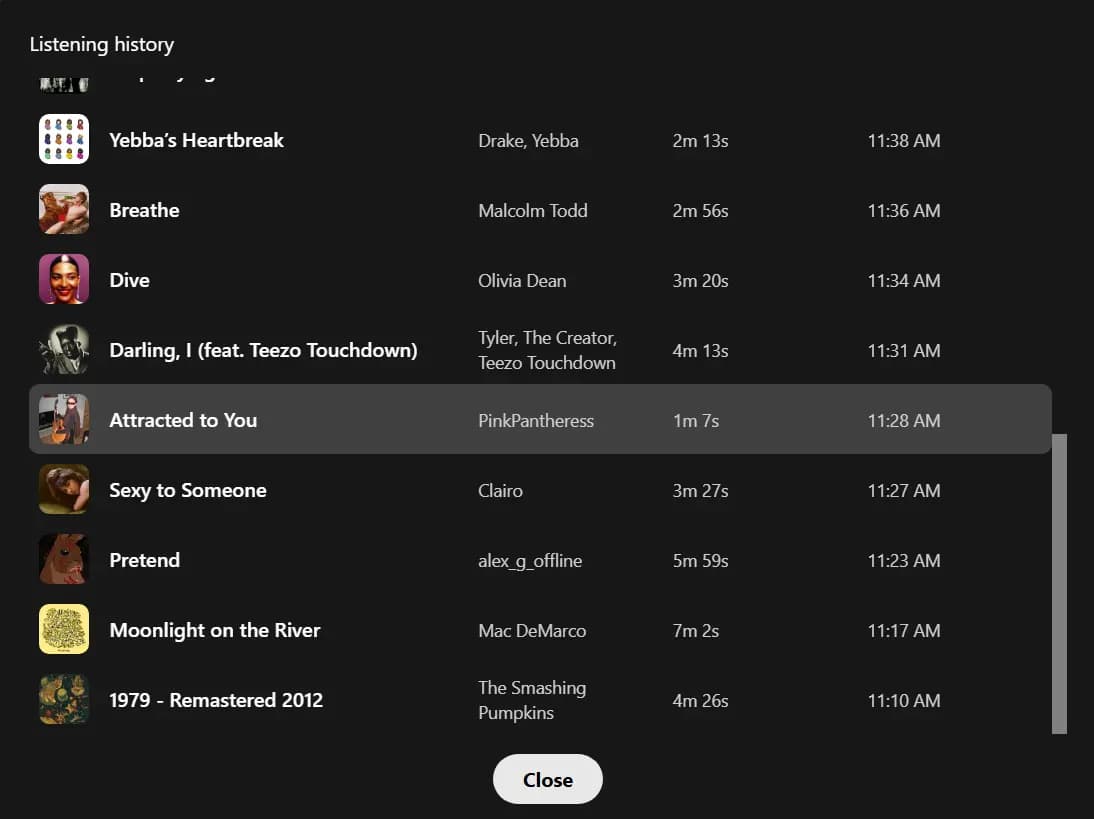
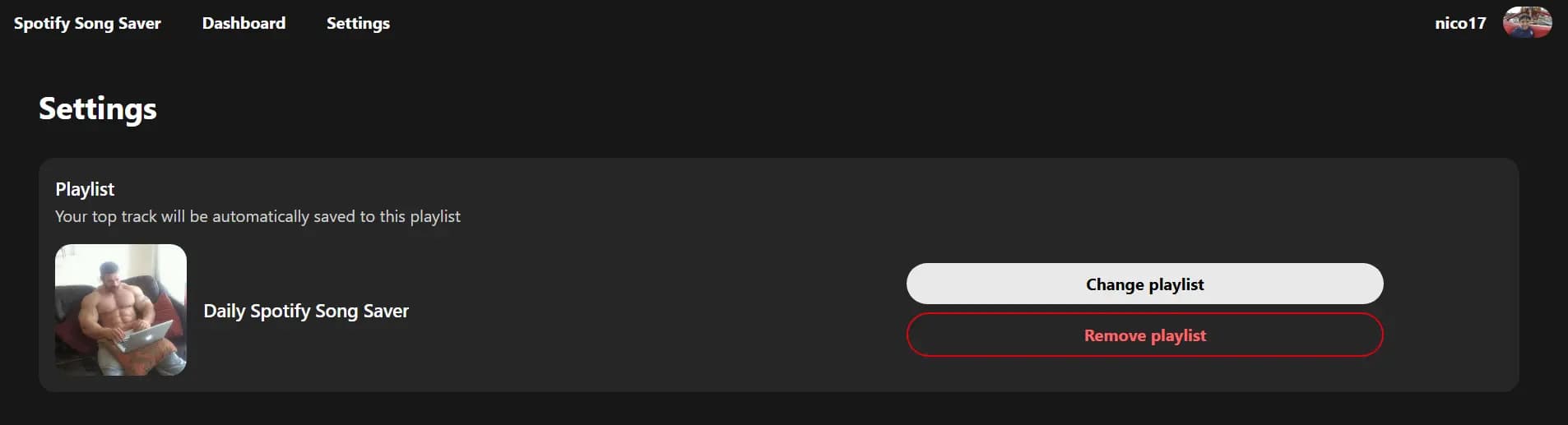
I made all of these pages using my own components styled with TailwindCSS and I tried to account for responsiveness and accessibility. Although I was able to somewhat accomplish this, it did take a lot of time which I could have spent working on extra functionality. Next time, I will definitely give component libraries a try as they already have these features accounted for.
Conclusion
I really enjoyed creating this project as it was something that I built around a personal need rather than something contrived. Being my first complete and working application, I have learnt a lot about what it takes to create a full stack system. From implementing backend architecture, working with a real database, handling session based authentication, designing my frontend pages and much, much more.
Going forward, I do believe that this concept does have many potential users, but unfortunately Spotify makes it effectively impossible to scale. At the moment, my app is in development mode, which means it is limited to 5 authenticated users. The extended quota access lifts this restriction but to obtain this, developers must have a minimum of 250,000 monthly active users and a legally registered business entity. So sadly for now, this app only works as a personal tool, and reaching a wider audience would require the unlikely chance that Spotify significantly loosens these restrictions.